Kachchi Makki Di Roti: A Rustic Punjabi Cornbread That Tells a Village Story
A Dish Born from Everyday Village Life
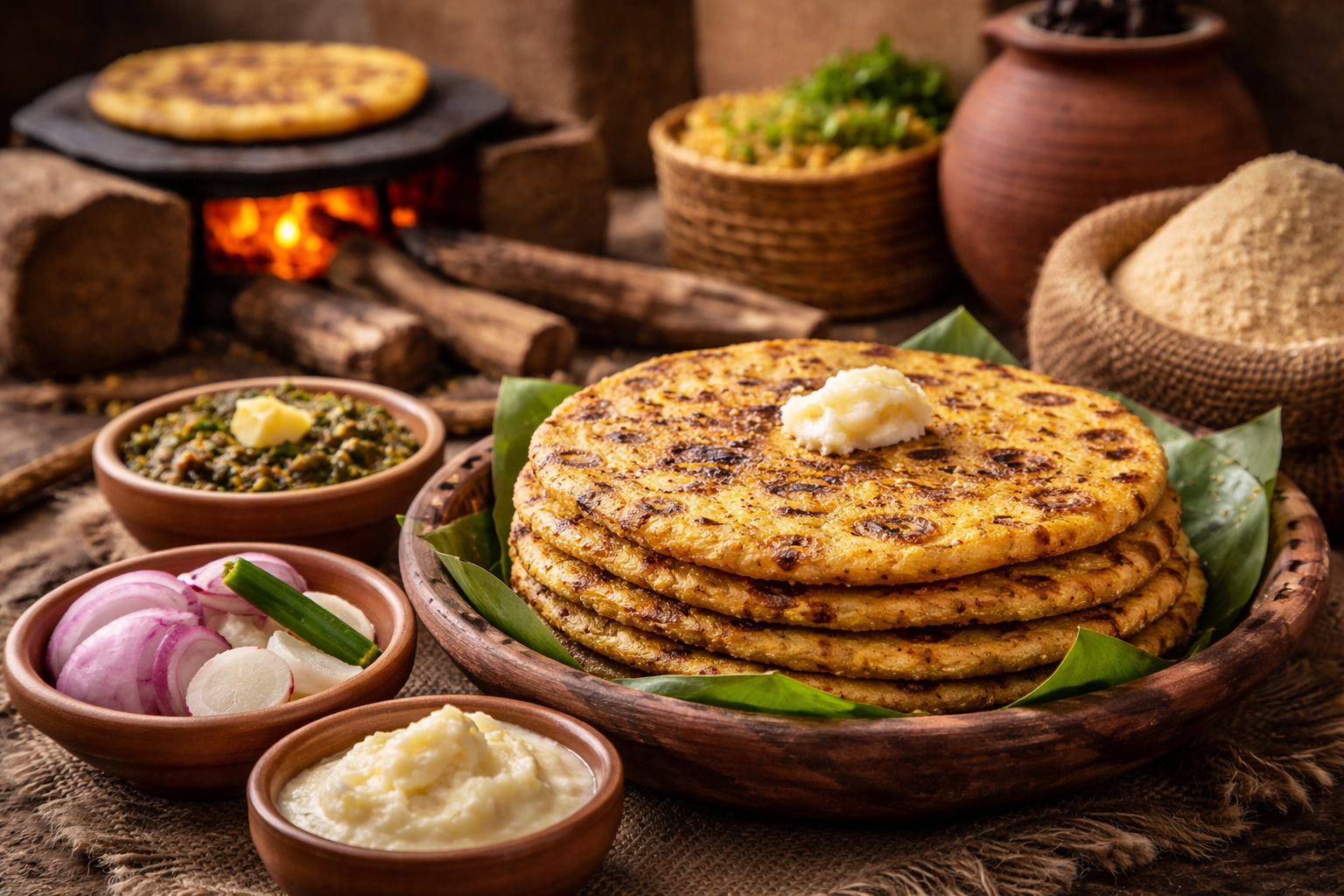
Kachchi Makki Di Roti is not a dish that was created to impress. It came into existence quietly, inside village homes where food was shaped by availability rather than trends. In rural Punjab, maize was a dependable crop, and families learned to use it in its most natural form. The term “kachchi” reflects this honesty, pointing to a coarse texture and an unrefined approach that mirrors the pace and values of village life.
How Seasons Shaped This Traditional Roti
This roti is deeply connected to the winter months, when freshly harvested maize became part of daily meals. During colder seasons, households preferred foods that could keep the body warm and provide long-lasting energy. Kachchi Makki Di Roti naturally fit this need. It was commonly prepared early in the morning and eaten during long working hours in fields, making it a practical and reliable part of rural routines.
Taste and Texture That Feel Grounded
What sets this roti apart is its earthy character. It does not aim for softness or visual perfection. Instead, it carries the natural grainy feel of maize, with a mildly sweet and smoky flavor that comes from slow cooking. Each bite feels grounded and filling, reminding people of a time when food was meant to satisfy hunger first and decoration came second.
A Food That Supported Physical Labor
In farming communities, meals were chosen for strength, not indulgence. Kachchi Makki Di Roti was valued because it kept people full for hours and supported physically demanding work. Its natural fiber and slow-releasing energy made it suitable for long days without frequent meals. This is one reason elders often speak of it as a food that “held the body together” during tough seasons.
Fading from Modern Kitchens
As modern cooking methods and refined flours became common, dishes like Kachchi Makki Di Roti slowly disappeared from urban kitchens. Many younger generations recognize makki roti in a polished form but are unaware of this older version. Its decline is not due to lack of value, but because it requires time, patience, and an understanding of traditional cooking rhythms.
Why Remembering This Roti Still Matters
Kachchi Makki Di Roti represents more than a forgotten Punjabi dish. It reflects a way of living where food, land, and effort were closely connected. Revisiting such dishes helps preserve cultural memory and reminds us that some of the most meaningful foods are the simplest ones, shaped quietly by generations of everyday life.