Sweet Heritage in a Jar: Gajjaraan Da Murabba
1. What Is Gajjaraan Da Murabba?
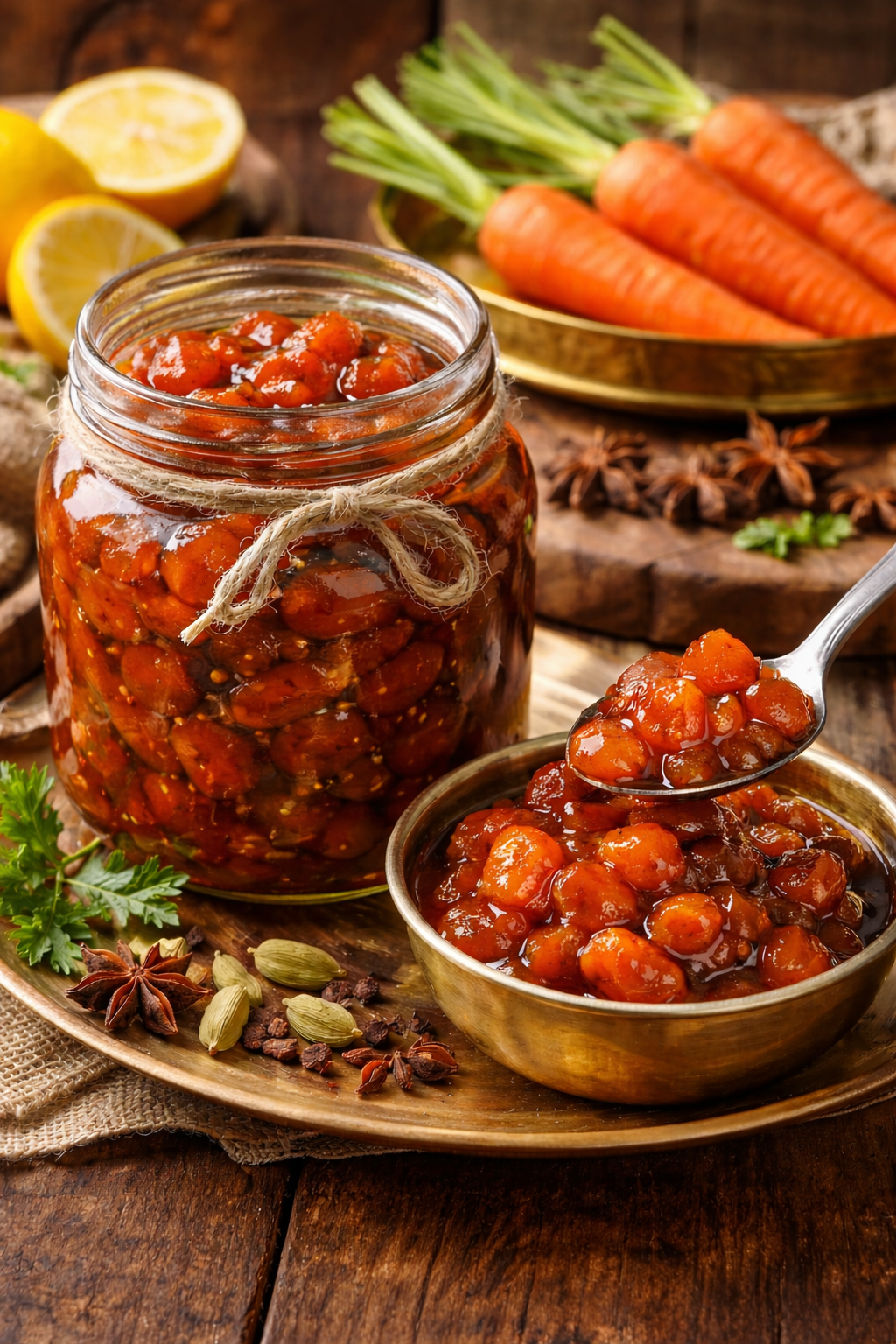
Gajjaraan Da Murabba is a traditional Punjabi sweet preserve made from fresh carrots cooked slowly in sugar syrup. It is valued not just as a dessert, but as a long-lasting homemade delicacy often served in small portions. Unlike carrot halwa, murabba focuses on preservation and concentrated flavor rather than richness.
2. Traditional Preparation Method
The process begins with tender, seasonal carrots that are peeled and cut into pieces. These are gently blanched and then simmered in sugar syrup until the carrots turn glossy and semi-translucent. Cardamom and cloves are commonly added for aroma, while lemon juice or citric acid helps balance sweetness and improves shelf life. Slow cooking is essential to allow the carrots to absorb the syrup evenly.
3. Texture and Flavor Profile
Gajjaraan Da Murabba has a soft yet slightly firm texture, with carrots holding their shape while being fully infused with syrup. The taste is sweet but not heavy, with mild earthy notes from the carrot and subtle warmth from spices. When made correctly, it avoids bitterness or crystallization.
4. Cultural and Dietary Importance
Traditionally, murabba was prepared in winter and stored for months, making it a practical sweet before refrigeration was common. It is often consumed in small quantities after meals and is sometimes associated with digestive comfort due to its slow-cooked nature. In many Punjabi households, it is still considered a symbol of careful home cooking and preservation skills.
5. How It Is Served Today
Today, Gajjaraan Da Murabba is enjoyed on its own, with warm rotis, or as a small accompaniment to meals. While modern versions may adjust sugar levels, the essence remains the same: a simple, slow-made preserve that reflects patience, tradition, and respect for seasonal produce.